Avebury House
  • Home
  • About
    • Board of Trustees
    • Vision and Mission
  • History
    • Avebury House History
    • Richmond History Group
  • Room Hire
    • Rooms
    • Rates
    • Booking
  • What's On
    • Classes and Groups
    • Past Avebury Events >
      • Richmond Gala >
        • Richmond Gala 2024
        • Richmond Gala 2023
        • Richmond Gala 2021
        • Richmond Gala 2019
        • Richmond Gala 2017
      • Matariki in the Zone >
        • Matariki in the Zone 2025
        • Matariki in the Zone 2023
        • Matariki in the Zone 2022
        • Matariki in the Zone 2021
        • Matariki in the Zone 2020
        • Matariki 2019
        • Matariki in the Zone 2018
      • Spring Fair >
        • Spring Fair 2022
        • Spring Fair 2020
      • Avebury Xmas Market >
        • Avebury Night Market 2019
        • Avebury Night Market 2018
      • Teddy Bears Picnic >
        • Teddy Bears Picnic 2019
        • Teddy Bears Picnic 2017
      • Wedding Open Day 2018
      • Dementia Walk 2018
  • Newsletter
  • Contact

Richmond History Group

The Richmond History Group is based at Avebury House. The group maintains a collection of books, photographs and other memorabilia illustrating and recording the history of Avebury House and the development of the surrounding suburb of Richmond. We seek to expand the collection and have begun a project to digitise items from the collection and make them available online. This is a work-in-progress and we will be adding items to this site from now on.

If you have photographs or other material concerning Richmond’s past, we would love to hear from you. Perhaps you would like to donate items to the collection, or allow us to view the material and if suitable, borrow items for recording and adding to our digital archive. We would of course return the items to you in the same condition as we received them.

If you would like to learn more about the group, or become involved, please contact Andrea at 381-6615.
Christchurch Drainage Board Bingsland Map, 1882

10/10/2025

0 Comments

 
Picture
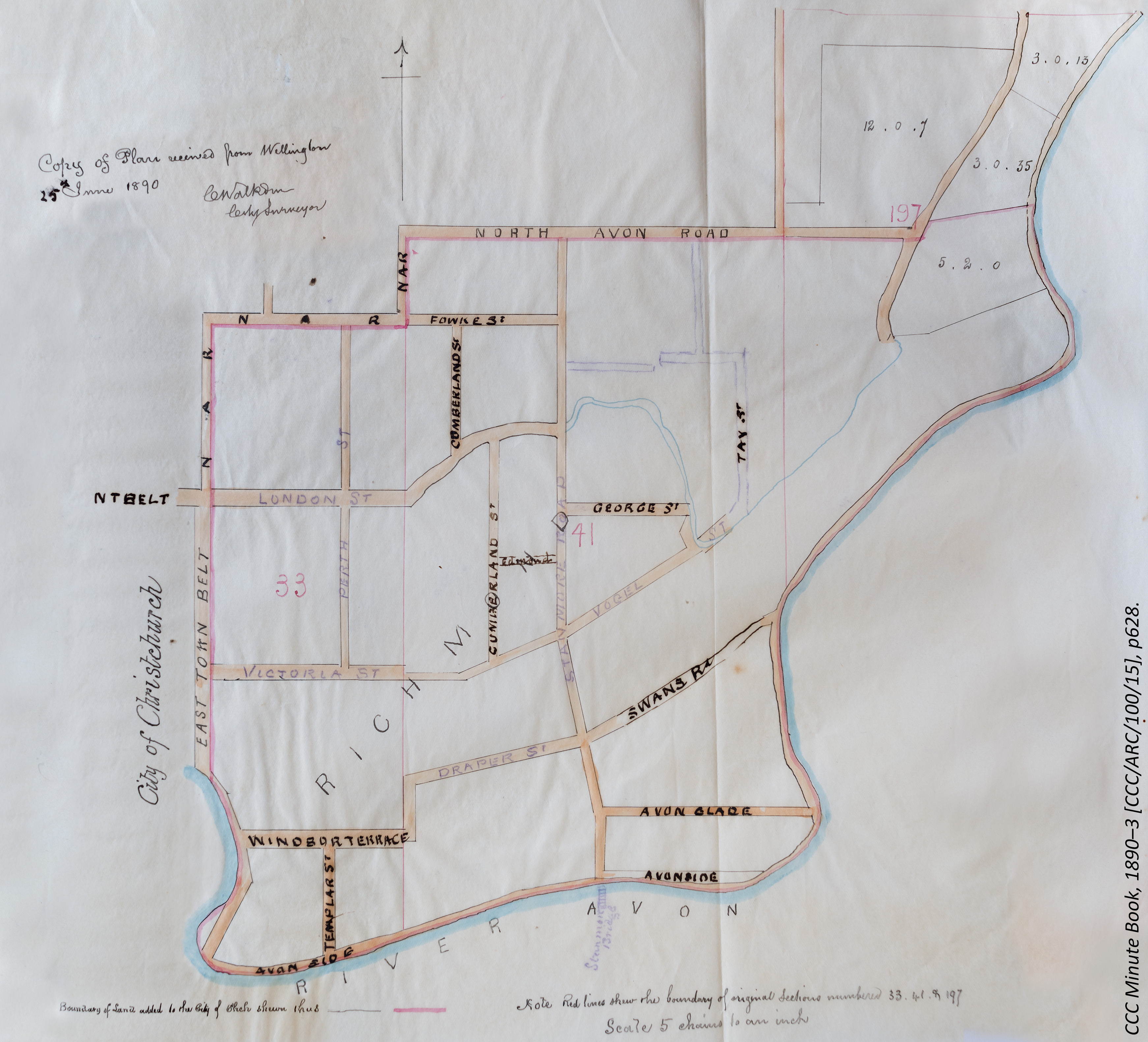
Our thanks to thanks to Jo Churcher who recently donated two historical Christchurch Drainage Board maps of Richmond. Jo says the maps were unearthed during the SCIRT work to rebuild Christchurch’s infrastructure and they were very helpful within the older sections of the city. One of the maps is shown above and dates from 1882 when the board began work on draining the well-populated area of Bingsland(1). 

The drainage scheme had been presented to the board two years earlier by the board’s engineer, Charles Napier Bell(2) (1835–1906). A report of the plan was published in Christchurch newspapers in June 1880 — see below. The original plan dealt only with storm water and was doubtless very welcome to local residents because Bingsland had long been regarded as a very damp part of town and prone to flooding.

The plan above was originally for stormwater drains only but shows the work of several hands at different times. The original annotations include the street names and layout, most of which are the same as today. The handwritten text on the plan reads:
"This is one of the drawings mentioned and referred to in the annexed agreement dated the nineteenth day of April 1882."
signed by John Brightling(3); [witness signature illegible.]

Later handwriting includes much pipe-related detail and also updates the naming of some streets — these include:

    Pavitt (for the southern portion of Cumberland)
    Alexandra St (for Victoria St)
    Avalon St & McLeod St (for parts of the old N Avon Rd)
    Stanmore Rd (unmentioned on original)
    Warwick St (unnamed on original)
    Cumberland St (north end only).


The original scheme was clearly designed to provide for storm water only. Later the title has been roughly altered to ‘Duplex Sewers’, presumably handling both storm and wastewater (i.e., sewage).
The newspaper article below refers several times to Bingsland Creek, which is shown clearly on the map. This waterway used to flow through the area and was responsible for the bends in London Street — a small part of the creek is still visible above ground in Gowerton Place. Jo says when the creek was filled in, it was encased in a brick barrel sewer. If anyone would like to see what a brick barrel looks like, the Council opened one up several years ago in the small park at the eastern end of Salisbury Street. They are wonderful examples of the mason’s art and most of them survived the earthquakes.

Notes
1    The name Bingsland would soon fall out of use, as the name of the recently inaugurated Richmond school district would soon come to be applied to the suburb.

2    Charles Napier Bell (1835–1906), whose signature can be seen in the bottom right corner, dated 29 March, 1882, was the board’s engineer who devised the scheme. He resigned from the Drainage Board later that year and was replaced by the board’s deputy engineer, Edwin Cuthbert (1845–1924). Mr Cuthbert, who was a long-time resident of Bingsland/Richmond (he lived on River Road), had a long and distinguished career with the Drainage Board; Cuthberts Green & Road are named after him.

3    John Brightling (1843–1928) who wrote the note was a well-known Christchurch contractor who presumably had won the contract to install the drains  for this plan. Later in the 1880s & 90s he was involved in constructing several of the tramlines that would change the face of the city. One of these tramway routes, for the City and Suburban Tramway Company, ran from the city to Burwood and passed through Richmond.

Newspaper Reports
From the Christchurch Star, 29 June 1880, Page 4 (excerpt from the engineer's report):
“I submit a plan for a main sewer through Bingsland, to take in the Bingsland Creek and the water in the eastern end of the North belt drain, with several lines of pipes to drain the surrounding streets. This system of storm-water sewers would cost about £2600, and even with this system the township will not be conveniently and efficiently drained until the streets be lowered, and proper side channels constructed to lead the water into the sewers.

In some places the roads are 2ft 6in to 3ft above the sections, and they should be formed to the proper height before the sewers are laid. In recommending the expense of a main sewer, instead of using the Bingsland creek, I have in view that requests will before long be made to have the creek filled in, and that the sewer being at a much greater depth than it is possible to deepen the creek to, the drainage to the sewer will always be more capable of extension to greater distances than any system of drains leading into the present creek. At the same time the water in the large drain in the East belt will be turned into the new sewer to keep it clean, and will always be useful for fire engines, as there is a large quantity of spring water discharging down the East belt drain. It will be seen from the plan that the sewer will pass through a short distance in private land, but it will be so deep as not to affect the properties, and a few man-holes only will be necessary for inspection. This sewer will no doubt tap numbers of springs, which will have the effect of keeping the land dry. If the Board decide to lay down these sewers for storm-water I think it would be advisable not to lay sewage pipes for a few years, until the town be more built up and the roads properly formed.”
​

And from the Christchurch Star 13 April 1882, Page 4:
“Tenders were opened for the following works :— The Bingsland storm-water sewer and flumes and drains. They were referred to the Works Committee and Engineer, with power to accept.”


0 Comments

RICHMOND SCHOOL: PERSONAL RECOLLECTIONS

18/8/2025

0 Comments

 
By John Cookson, assisted by Colin Cookson, July 2025
Picture
The main building at Richmond School was opened for the 1925 school year and remained in use for 50 years.
John Cookson, who attended Richmond School between 1946 and 1951, has recently written about his memories of the school. John's name appears on the school's honour board which is now housed at Avebury House; John was Dux of the school in 1951, as his brother Allen had been the previous year. It's great to have such a vivid account of the school in the mid 20th century. Does anyone else have memories of Richmond School?
​ I attended Richmond School for the whole of my primary education, 1946–51, before proceeding to Shirley Intermediate. My twin brother, Colin, of course started the same day, which must have been comforting.
​
These years coincided with the beginning of the post-war ‘Baby Boom’. In my time at Richmond, the roll came to exceed 400 children. A large state housing development around the eastern end of North Avon Road down to the river must have been a major factor in this increase. While I was at Richmond, a new ‘infant block’ (1951) was built to accommodate the growing numbers. As it was, I spent Standard 3 in a prefabricated classroom, apparently re-cycled from St Alban’s School and located away from the old main block. The Standard 4 class in my last year at Richmond comprised over 40 pupils, what in this era was a not untypical class size. 
Picture
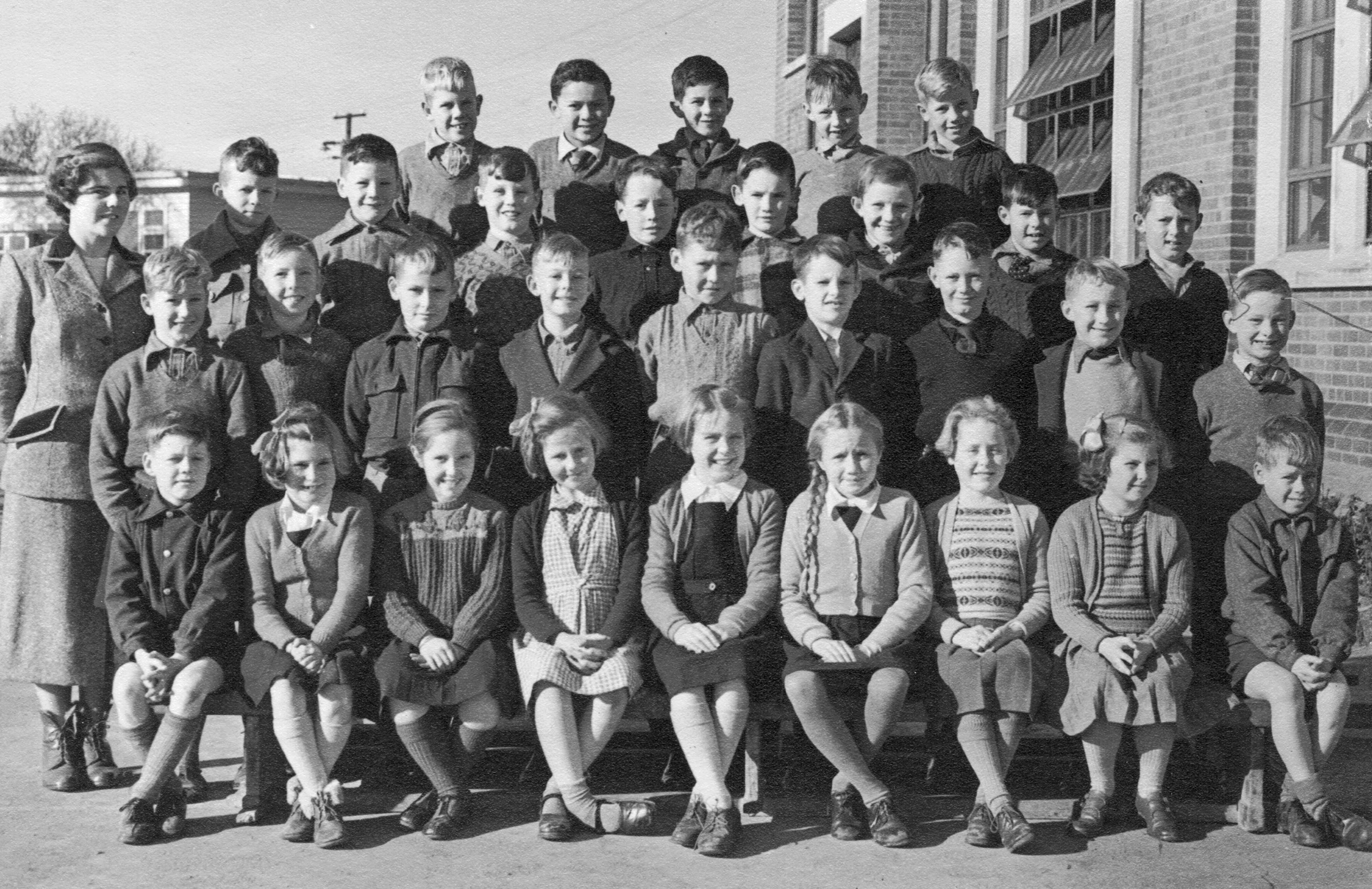
John’s primer 4 class, with 41 pupils!
Back Row: Gavin Cook, Peter Wentworth, Ken Le Compte, Don Murray, Max Kenelly, Allen Weir, Colin Cookson.
Third Row: Ray Chinnery, Charlie Saxon, Roger Dixon, John Rikihana, Donald Wood, John Cookson, Gavin Port, Peter Shaw, Tony O'Hagan, Brian Moore.
Second Row: Lynette Captain, Elsa Stigley, Barbara Ede, Jean Ross, Ailsa Hamilton, Georgina Hewson, Hazel Banks, Beverley McGregor, Heather Aitken, Nola Wentworth, Pauline Clarkson, Valerie Kirk.
Front Row: June Roberts, Norma McGregor, Daphne Pike, Janice Turner, Veronica Roughan, Beverley Andrews, Faye Waddell, Valerie Burney, Jean Rennie, Barbara Shaw, Colleen Yeatman, Joy Wakelin.
Teacher: Miss Milne.

 Already there when I began at Richmond was a small block of two ‘open air’ (folding doors on the north side) classrooms located by the Pavitt St entrance where I was taught in Primer 4 and Standard 1.
​
A School Dental Clinic stood alongside this building while I was at the school. A trained dental nurse ran the ‘murder house’, as we called it, using a pedal-driven drill to deal with tooth cavities. In those days the main cause of tooth decay must have been the absence of regular cleaning. I have a vague memory in Standard 3 of ‘Nurse Silcock’ coming to class and urging us to eat apples or raw carrots. ‘Coke’ and ‘junk food’ were unknown, only ‘fizzy drinks’, locally manufactured by Quill Morris or Cowles.

The other health initiative to note was the daily provision of milk (pasteurized) to every child. A ‘milk crate’ was delivered to every classroom before school, collected from the Pavitt St gate by Standard 4 boys, specially appointed. The half-pint (300ml) cardboard-topped bottles were distributed in class just before the bell went for morning ‘playtime’. Drinking straws were handed out. I liked drinking the milk but more than a few didn’t, especially if it had been warmed by the morning sun or winter central heating.

Each school day began with a morning ‘assembly’ at the impressive colonnaded main building entrance when the Headmaster briefly addressed us from the steps before dismissing us to our classes. Some schools had a flag-raising ceremony. We didn’t. But we did march off to the stirring strains of the ‘Invercargill March’, ‘Colonel Bogey’s March’ or somesuch, played through a loudspeaker located in a downstairs classroom. My elder brother in Standard 4 was one of those given the responsibility of putting the needle, scatchlessly, on the record.

Standard 4, which occupied the end classroom on the upper storey by the timbered fire escape, were permitted to use this stairway in and out of the building.

I don’t have a distinct recollection of how our day was divided – Time was something parents and teachers controlled. Classes commenced about 9, there was a morning ‘playtime’ about 10.30 and a lunch hour, 12 to 1. There was a short, five-minute, afternoon ‘playtime’ at 2, before school ended at 3. The primer children left at 2. 
​
I and my brothers went home to a cooked family dinner midday – our father worked in town and biked from there. I have no idea how typical this was, though certainly almost all mothers were ‘stay-at-home’ mums. When completed, the right-of-way through to Forth St from Eveleyn Couzins Ave slightly shortened all this daily trekking.

Picture
The Cookson’s house at 148 North Avon Rd, when the house was newly built in 1937.  The east end of North Avon Road is still unsealed.
​The busiest road Richmond children had to cross was, and still is, Stanmore Rd. About opposite Bruce St, where there was a marked pedestrian crossing, a ‘School Patrol’ regulated the traffic flow to give pupils safe passage, much as happens today outside many schools. My brother and I were rostered on to this duty. Girls were excluded. Under a teacher’s supervision, we manhandled long poles to which was attached at one end a large red disc emblazoned ‘School Patrol’. The sign, uplifted on the chant ‘Stop Up’, halted approaching vehicles. ‘Stop Down’ and the return to the horizontal allowed them to proceed on their way. Wet or shine made no difference. On wet days we were garbed in a copious cape with hood.
Picture
An aerial view of central Richmond in 1940. The highlighted areas show the school site between Perth & Pavitt streets, and the Cooksons’ home at 148 North Avon Rd.
Most of us walked to school, younger children without parents but in the company of older siblings. Today’s ‘drop off’ and ‘pick up’ by car was a world away. Pupils who cycled to school, relatively few though they were, had their bikes regularly inspected by City Council ‘traffic cops’ (traffic inspectors). A green ‘pass’ or yellow (repair needed) or red ‘fail’ (unsafe to ride) sticker was affixed to the frame, and a follow-up visit soon afterwards ascertained whether the necessary repairs had been made.

The two headmasters during my time were ‘Mr Parry’ and ‘Mr Dalley’. They remained remote figures, ensconced in an office I never remember entering. However, I do recall Mr Parry coming into our Primer 1 room and playing on the piano with admirable brio ‘Three Blind Mice’. 
​
The ‘School Committee’ was an even more remote authority. There was no PTA (Parent Teacher Association). Nor were there teacher-parent consultations. The mid-year and end-of-year ‘school report’ taken home was parents’ sole source of reliable information, extremely sparse in their detail compared with today.
Picture
A school report from 1948.
We were an exceptionally docile lot in class; we were instructed rather than learning things for ourselves. A teacher who wanted to get our attention might say ‘Hands on heads place’ and the whole class would immediately respond. I honestly can’t recall any impertinent or rebellious behaviour. New Zealand society generally was highly conformist, united around the same values and aspirations and showing ample respect for authority figures, teachers included. 

‘Mrs Thomas’ was the ‘infant mistress’ and my first teacher, but the name and the fact that she was kindly is the sum of my memory of her. Her successor, ‘Miss Burr’ (well-named?) was, apparently, a different proposition. To this day I can recite her sharp rebuke on one occasion to move us on – ‘Children, don’t dilly-dally in the alley’.

Primer 2 and 3 are lost on me, I suppose partly because my twin brother and I ‘skipped’ a year or part of a year. ‘Miss Milne’ and ‘Miss Davies’ were my teachers in Primer 4 and Standard 1, both kindly. Then followed a succession of male teachers, ‘Mr Silcock’, for a short time, and ‘Mr (Clifford) Bezar’ at Standard 2, ‘Mr (Gavin) Royfee’ at Standard 3, and ‘Mr (Rewi) Street’ at Standard 4. 

I later met up with Mr Bezar at Christchurch Boys’ High. He had served in the War. He was the only teacher at Richmond who gave me ‘the strap’ – for rushing off from some outside class activity when the bell went without waiting for his permission to leave. That said, there was very little corporal punishment administered, with the exception of ‘Johnny Bell’, of whom more later.

Mr Royfee was a talented cricketer, representing Canterbury in Plunket Shield and international matches. However, he never coached the school cricket team. We didn’t know it but he also sang in the Royal Christchurch Musical Society, and so was a man of many parts. Among the exercise books he required us to buy was included The Dominion Song Book; for some reason, ‘Shenandoah’ is the song that sticks in my mind. Thus we were introduced to group singing, if we had not already experienced it at Sunday School. 

The ‘prefab’ in which he taught us was freezing cold in winter, heated by a coal stove at the front of the classroom which inevitably favoured the teacher and a few of the pupils. We ought to have been more thankful of the caretaker who lit the fire earlier in the morning. Mr Clancy, the caretaker, lived in a house, presumably Education Board-owned, on the corner of Pavitt and London Sts.

Mr Street was an experienced teacher but possibly overstretched by the size of the Standard 4 class. At some stage during the year he requested that my brother and I help with the class arithmetic marking, furnishing us with his very own (red ink) ballpoint pen; ‘ballpoints’ were new to New Zealand. Doubtless he checked our work and informed us of any mistakes, but in no way would it happen today and should never have happened then. The greatest praise I can bestow on Mr Street is that he made school interesting and enjoyable. One example: a pile of soil had appeared in the playground on which he poured water to let us see the rivulets carrying material downhill; he then planted a sign labelled ‘EROSION’, and a new word was added to our lexicon of knowledge.

On another occasion, he sent me off to the Square with the bus fare to view the War Memorial by the Cathedral. His instructions were to hold it in my mind and provide a blackboard drawing when I returned. Next morning my rendition was compared - not altogether to my advantage – with actual photographs. I suppose Mr Street wanted to impress on the class the fallibility of memory, or perhaps that we should always rely on the best evidence available.

Mr Bell, ‘Johnny Bell’ as everyone familiarly called him, was the school character, not in the best sense of the word as he terrified his classes as much as taught them. He was notorious for his liberal use of the strap and much more serious misdemeanours.  I have it on good authority that in one class he sat at his desk ostentatiously sharpening a knife before hurling it across the bent heads to lodge in the back wall of the room. Such behaviour reduced children to numbed passivity.

I had only one encounter with Johnny Bell, in a drawing class. I think my grandfather had just been knighted after nine years as Mayor of Christchurch. He spotted that I had signed my picture ‘Sir John Cookson V.C.’ I was taken by the scruff of the neck and dumped in the large wickerwork wastepaper basket which was then placed tottering on the edge of his desk. He then stood back and taunted: ‘So this is the great Sir John Cookson’. Of course, I got what I deserved, especially if it was true, as many believed, that Bell had suffered grievously during the war.
​
It is very difficult to recall what we were taught and when, probably because learning is incremental and children simply absorb, rather than analyse, their progress. Year by year, with arithmetic, we extended our capability at addition, subtraction, multiplication and division. We avoided decimalization because it was more important to know pounds, shillings and pence and other ‘imperial’ measurements. Reading instruction began with New Zealand-published Whitcombe and Tombs ‘readers’. We first learnt to print before embarking on cursive writing in Standard 2, eventually forsaking pencils for ink wells and ink-filled G-nib pens. I vaguely remember being taught how to set out a business letter with the formal ending, ‘Yours faithfully’. I have no memory at all of composing short pieces of original prose, though we must have done. No homework was rigorously required; Schonell spelling lists came later. After school, for the most part, we simply played with siblings and friends.
Picture
John painted this view from their North Avon Rd house in 1953. The scene shows the corner of North Avon Rd and North Parade — yes, there was a garage on that corner even then! The grey canopy is an army truck in for repairs, with someone’s blue Morris Minor behind.
There was no systematic teaching of art or music. Sunday School was where a singing culture for children mainly existed. An innovation was radio ‘Broadcasts to Schools’ which were heard through a speaker in the classroom. This was one way pupils could extend the very limited repertoire of songs. We sang in parts: ‘Row, row, row your boat, gently down the stream, merrily, merrily merrily, life is but a dream’.

These remarks don’t do justice to the standard of performance exhibited at the School Concert in my Standard 4 year. The boys, interestingly enough, presented a raucous haka in outfits and painted faces that nowadays would almost certainly be deemed offensive; there was only one boy in our class with a Maori family name – John Rikihana. Colin and I played a piano duet, me fumblingly. Many were similar individual items, since many children learnt the piano, dance, and so on. Carol Hampton of Standard 3, stole the show, prettily dressed up to sing with remarkable poise and confidence, ‘Mocking Bird Hill’.

Apropos children and music. On Saturday mornings ‘Miss Bell’ offered piano lessons at the school. At a guess, about 30 attended where they were given about five minutes of instruction in the Primer 1 classroom before being sent on to the Hall where a senior pupil heard them ‘do their practice’. Practice didn’t make me perfect, mainly because I did so little. But it must be acknowledged that doing the rounds of perhaps two or three schools over many years, Clarice Bell provided music-making opportunities for literally hundreds of Christchurch children. 

I remember the vacant ground at the Perth St entrance being developed into a ‘school garden’ for growing vegetables, most likely in response to some Department of Education edict. No real effort was made to bring things to harvest; indeed, the long summer holiday must have left any plants to fend for themselves. Yet we were encouraged to establish and tend vegetable plots of our own at home, with a certificate as the reward for our efforts.

At ‘playtime’ organized games hardly featured, certainly not under any kind of teacher supervision. Boys and girls amused themselves separately. Girls skipped or played knuckle bones or hopscotch or whatever activities boys were unaware of. Marbles were popular among boys. Strangely, I remember the two best players in my year – Ray Chinnery and Charlie Saxton – though perhaps that is because they relieved me of most of mine when ‘playing for keeps’. There was a vocabulary attached to the game; a ‘bum squasher’, for instance, was a marble the size of a large ball bearing that might send any number of others out of the ring.

There was little inter-school sport. Not everyone had bicycles to get to away matches. I suppose the few that did occur were specially arranged, and then usually cricket or rugby. I loved cricket but recall playing only one or two games, of course in Standard 4, and the same may have been true of rugby. Our rugby jersey was the closest we had to a school uniform; it consisted of a navy blue top with a reddish band around the middle. There were school baths outside the school grounds across Pavitt St but they remained rundown and unused until some enthusiastic locals cleaned them up and formed a swimming club about a year after I left Richmond.
​
The school’s 75th anniversary celebrations took place while I was there, in 1950. Of course, most of the events were directed at ex-pupils. Even so, the teachers organized what they called ‘tabloid sports’ for us which included relays and three-legged and sack races for the different age groups. I seem to remember we competed under different houses to add to the excitement of the day.
Picture
John mentions pupils receiving Honours Certificates at the end of the school year. This is the first one we have seen.
​The final event each year was the School Prizegiving attended by parents, members of the School Committee and sometimes the local MP (Jock Mathieson). It was held in the School Hall. I don’t remember it as an exhilarating affair – plenty of speeches above our heads and the constant churn of pupils going up for their awards (‘Honours Certificates’) punctuated by applause. The real excitement was the final act in the classroom when desks were pushed to one side and stacked so that Mr Clancy could oil the floorboards during the long summer break. The emptiness was cathartic. What a joy it was to contemplate ‘no more school’ for six weeks! Didn’t every kid?
Picture
The medal John was awarded for Dux of the school in 1951 — front and back views.
0 Comments

Richmond School class photo: 1947, Std 4

5/2/2024

1 Comment

 
Picture
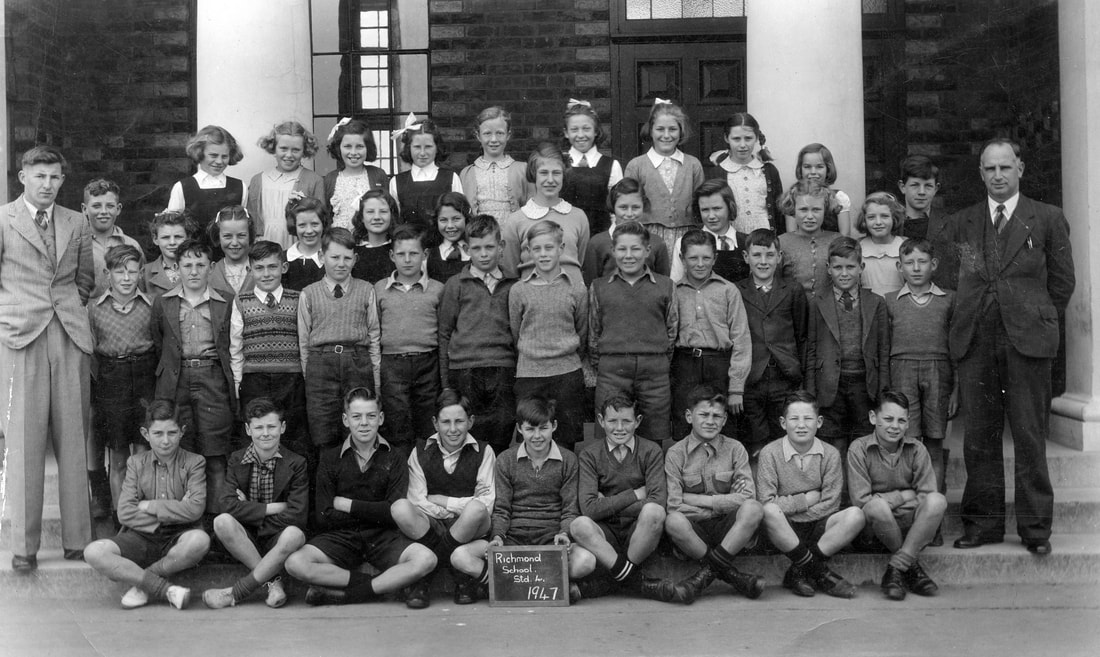
Recently Mike Bunce contacted us. Mike had come across an old Richmond School class photo (above). Mike’s mother, Irene Dawn Keats (1936–2004, known as Dawn) is in the photo, 2nd row from back, 3rd pupil from the right. Otherwise, we don’t know any names of the class or the teachers.
You never know...somebody may be able to help us identify other people in the photo: Richmond School, 1947, Standard 4. If so, please get in touch ([email protected]).
1 Comment

Historical Photos of the Garden Avebury House

13/10/2023

0 Comments

 
Picture
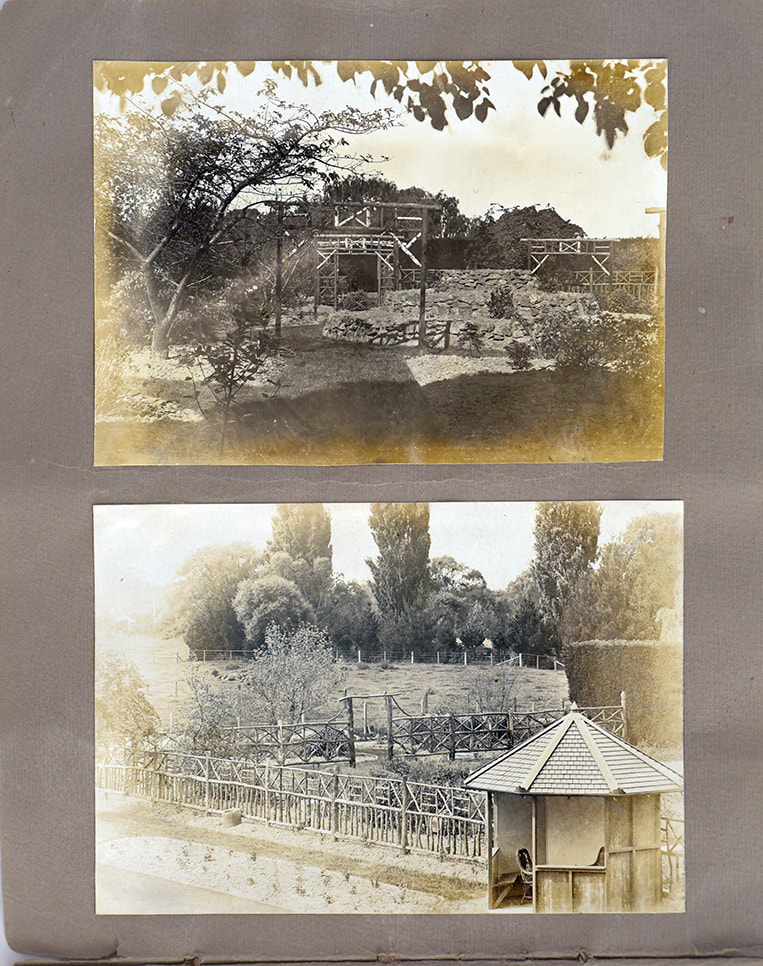
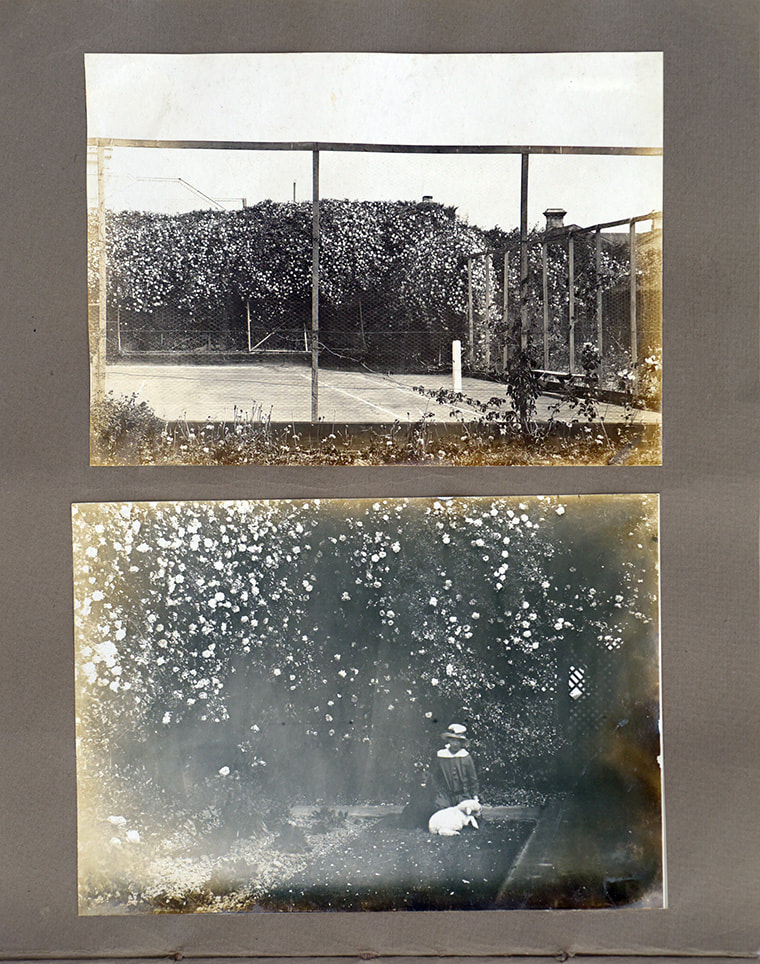
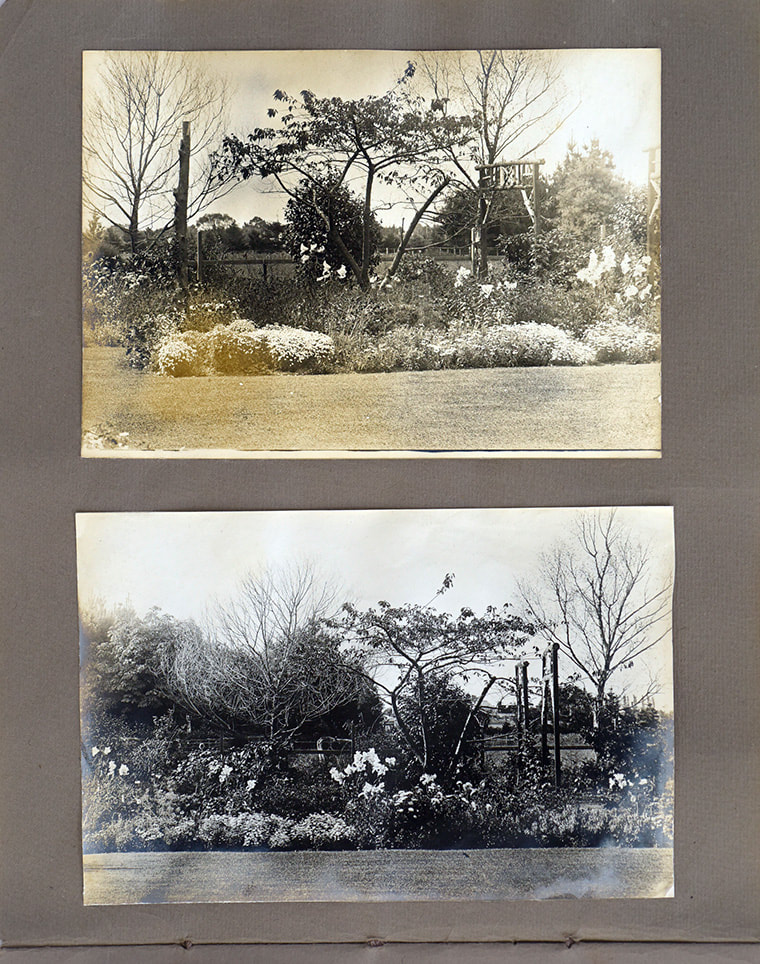
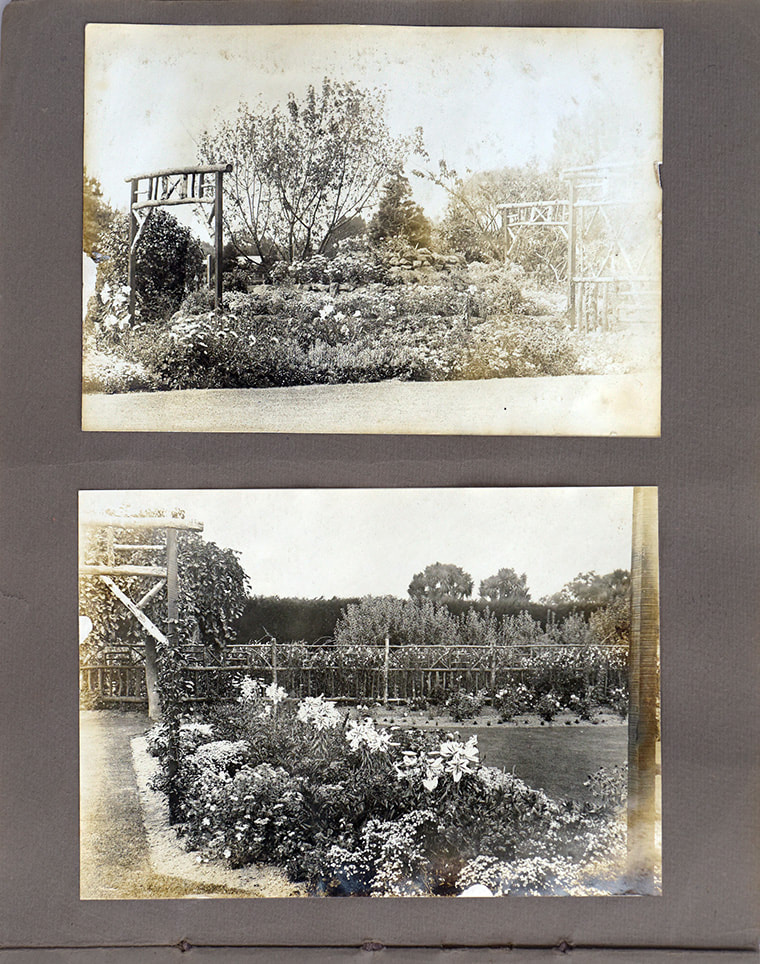
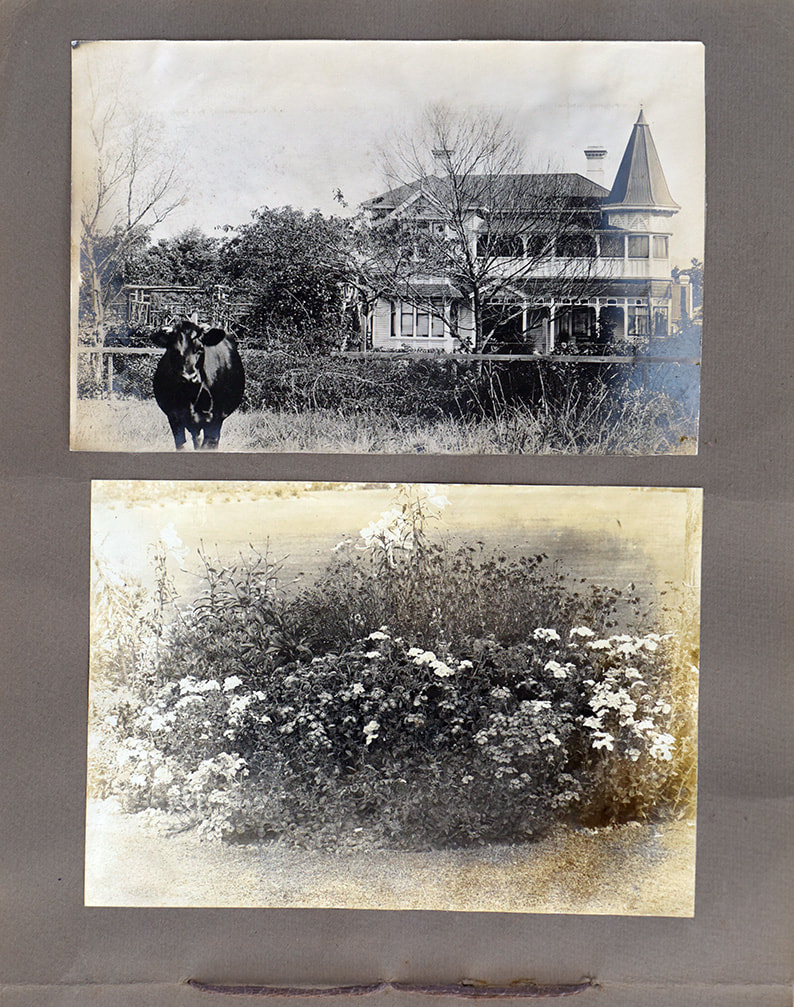
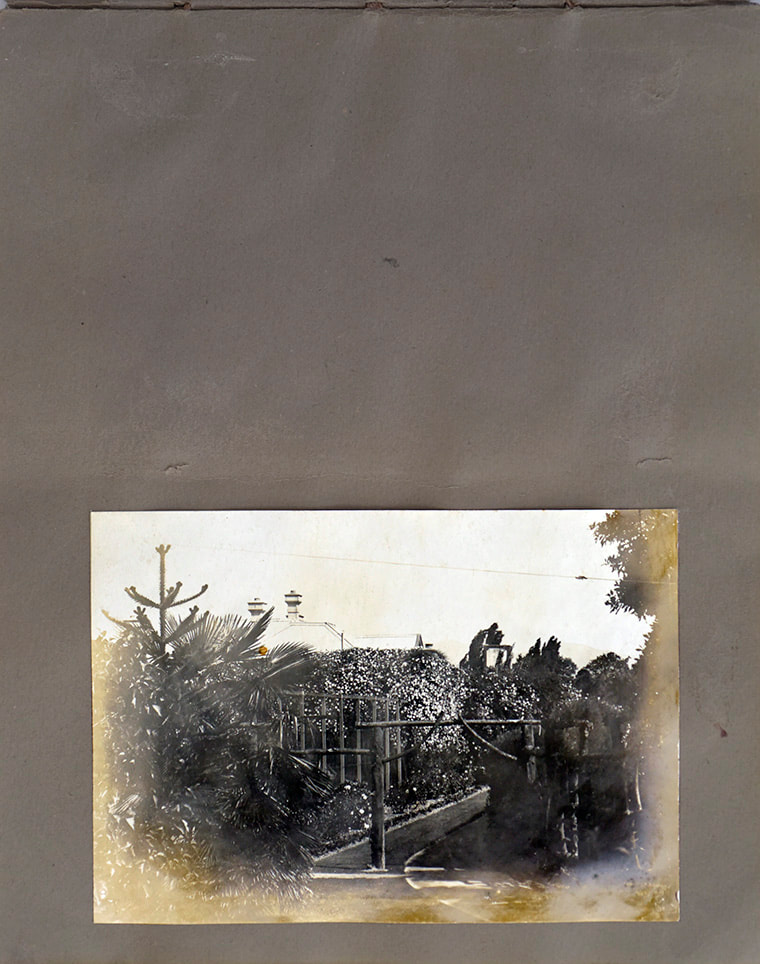
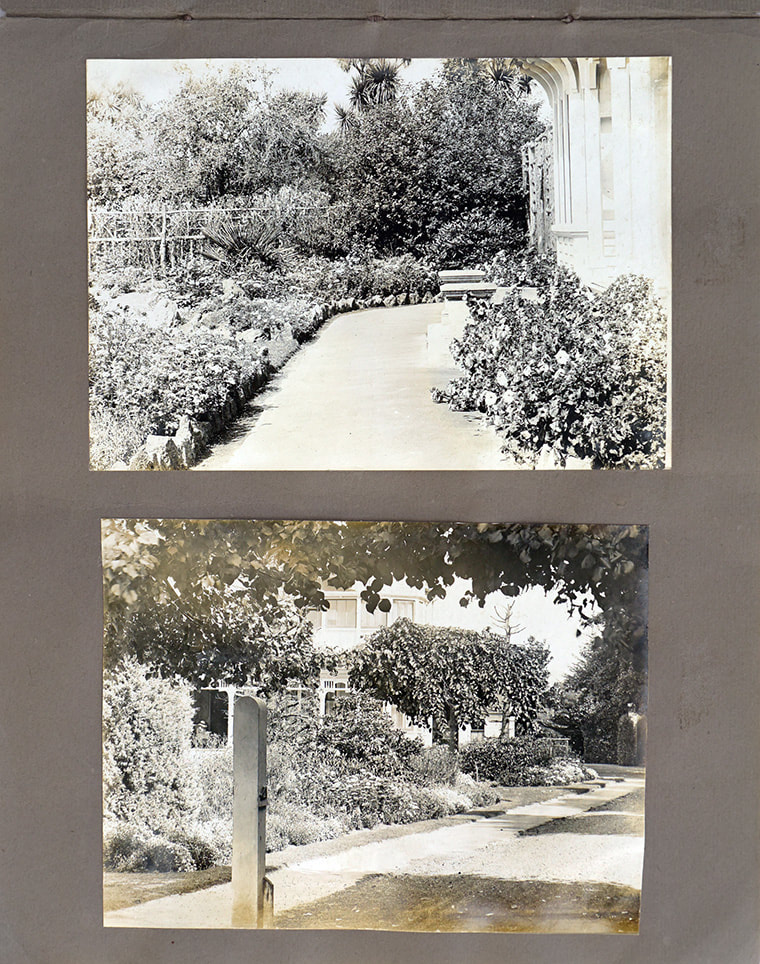
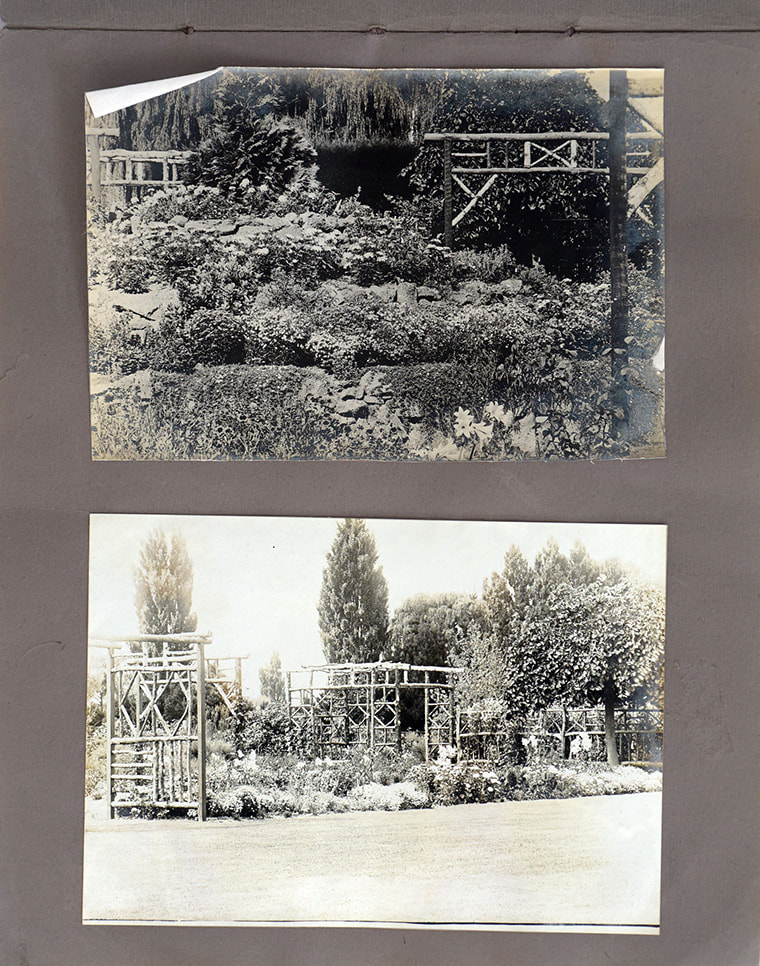
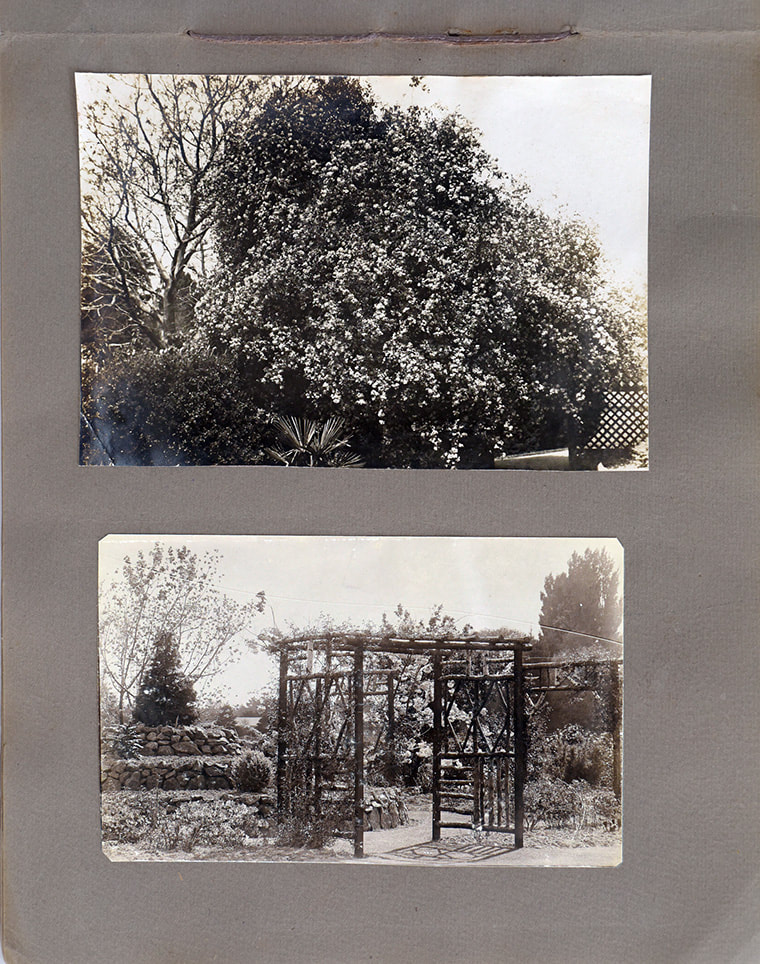
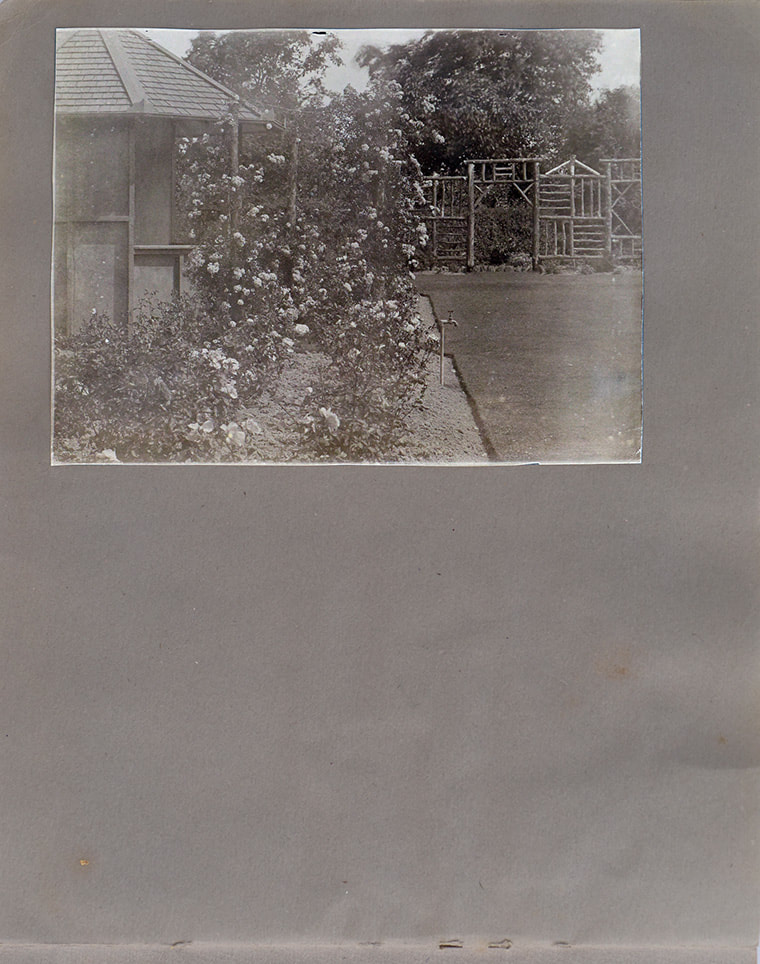
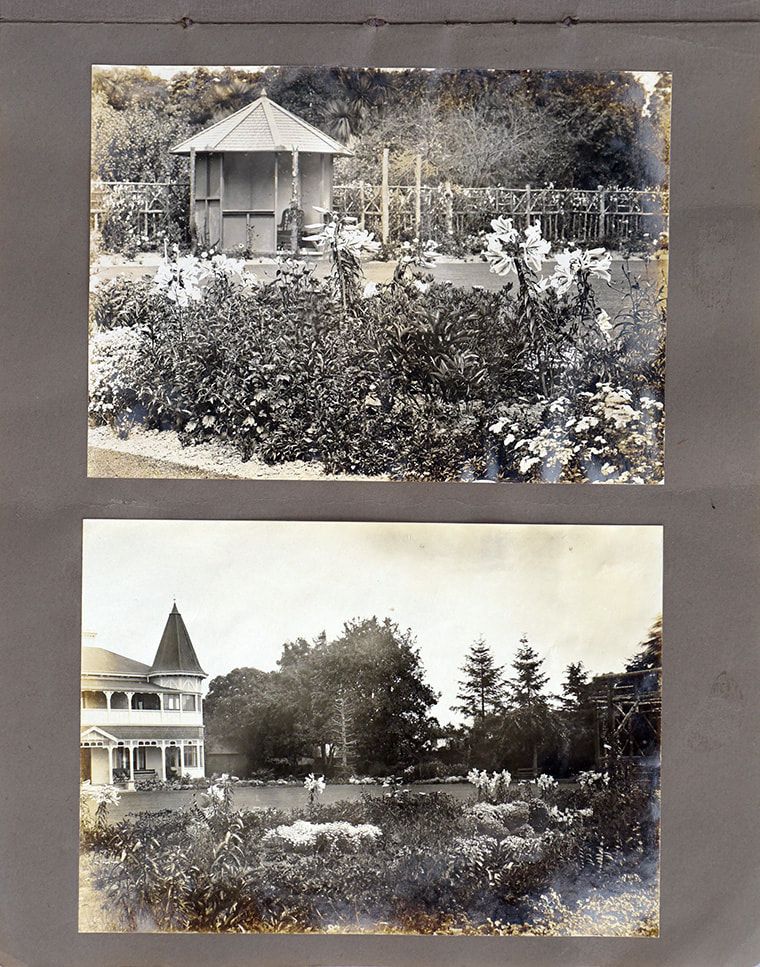
In 2022 we were very fortunate to have a set of Flesher family material donated to our collection at Avebury House. The material, documents and photographs, was donated by Geoff Taggart of Pleasant Point, South Canterbury and we are grateful to Michael Williams who helped bring the donation about.

The material consists of several boxes of items, including an 11-page album of photos of the garden at Avebury, probably taken in the 1920s. I have made copies of the album pages and these are posted below.

Some of the photos have been included in the Nottingham Report (see previous post), which has helped us date the images to around 1920. The photos have been glued into the album and are showing some discolouration. The eleven pages could well be a fragment of a larger album — the pages are bound together but there is no cover. Nor are there any captions or other information accompanying the photos.
​
Still the photos are well worth a look and show us a glimpse of garden design fashion in 1920s Christchurch. Our thanks to Mr Taggart for his wonderful donation.

David Hollander
Richmond History Group

Click on an image to see a larger version. ​
Picture
Picture
Picture
Picture
Picture
Picture
Picture
Picture
Picture
Picture
0 Comments

Avebury Park Property Report

13/10/2023

0 Comments

 
Picture
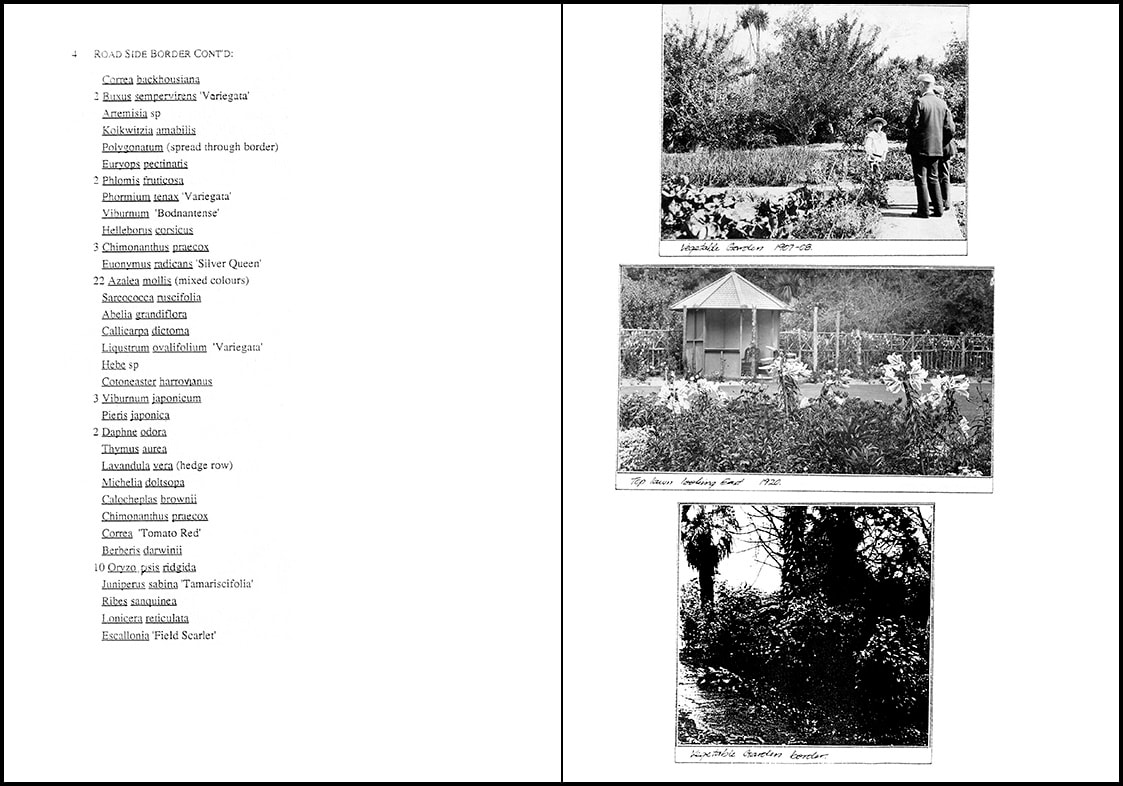
A 2-page sample from the report: a plant list of one of the garden beds. left, and a mixture of photos of the garden, both current with the report, and historical. Where possible I have replaced poor photocopies of the old photos with better quality scans.
In the Richmond History Group collection at Avebury House is a poor-quality photocopy of a detailed horticultural assessment of the grounds at Avebury. The undated report was compiled by Bede Nottingham of the Christchurch City Council and identifies individual garden borders and lists the plants in them. Unfortunately, the City Council have been unable to supply a better copy of the report, or indeed, any other information about the document — not even the year it was produced!?

The 26-page report includes 11 pages of photographs; some apparently taken at the time the report was prepared, and some being historical images of the garden — mostly taken around 1920 — when the house was still the Flesher family home. But sadly, the images have not come through the photocopy process at all well.

In the document below I have tidied up the photocopied text as best I can, but many of the images are in their photocopied state: just a batch of black blobs on white paper…a shame. However, I have been able to find better photographic copies of fourteen of the historical images in our collection, and I have super-imposed these images in the report, replacing the photocopy versions.

The report may be from the late 1990s when the City Council assumed management of Avebury House after the Youth Hostel Association ended their occupancy of the property. Or, perhaps some time earlier — who knows? Nevertheless, the document is a fascinating read for anyone interested either in the history of Avebury, or indeed in garden history in general. The historical images show how much the garden has changed over the years, and the exact identification of the planting makes the report a real snapshot of the garden at one point in its development…we just don’t know when that point was!?

If anyone can shed any more light on the report, or indeed, offer any more information about Avebury House or its garden, we would love to hear from you. Please contact Avebury House  ([email protected]).

David Hollander
Richmond History Group

avebury_park-nottingham_report-edited_version.pdf
File Size: 19473 kb
File Type: pdf
Download File

0 Comments

The Hickling Family in Richmond

14/8/2023

0 Comments

 
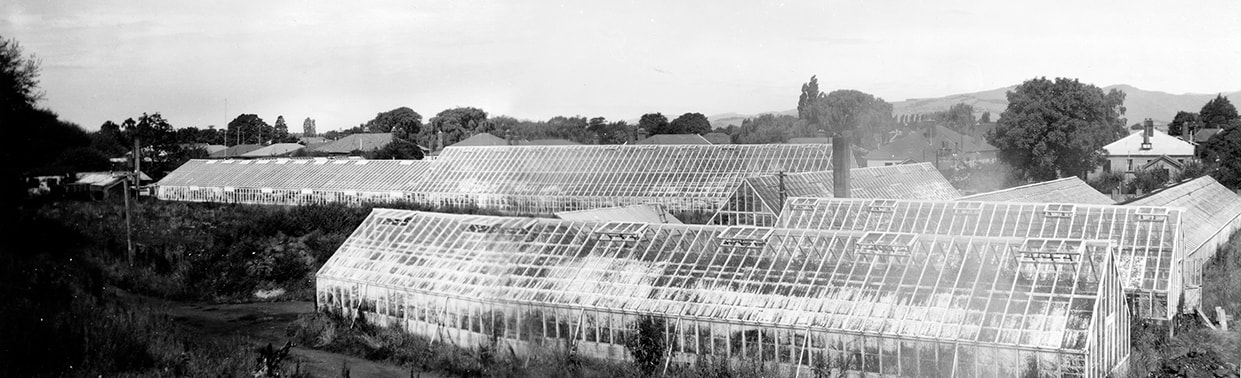
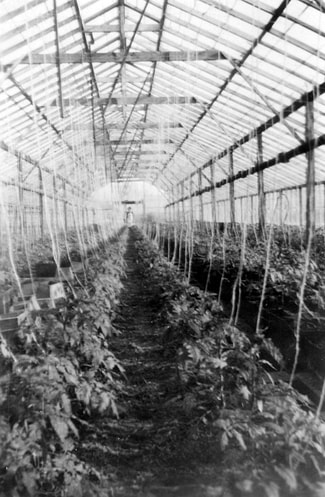
John Hickling, has recently loaned us a family photo album which includes pictures of the family’s tomato-growing business in Richmond, between River Road & Dudley Creek. Few of the photos have dates recorded, but seem to be taken mostly before 1950. 
Picture
About 1925, John’s grandfather, William Hickling (1886–1967) bought two acres of land in North Richmond, west of Dudley Creek near its confluence with the Avon River. The purchase must have seemed a good deal to him, because the previous year he had owned an acre of land in Papanui, which included a house and four glasshouses growing tomatoes, along with other horticultural infrastructure.
​
The Hickling family would live at the Richmond property for the next 50 years. As these photos show, the business the family developed here became a considerable enterprise. When William retired in the 1950s, his son Arthur (1920–2000) took over the business, in partnership with his sisters and their husbands. Later, when North Island tomato growers began flooding South Island markets with cheaper tomatoes grown outdoors, the family switched to growing carnations. Arthur sold the property in the mid-1970s and went on to sell real estate with Drewery’s Estate Agency in Christchurch.
Picture
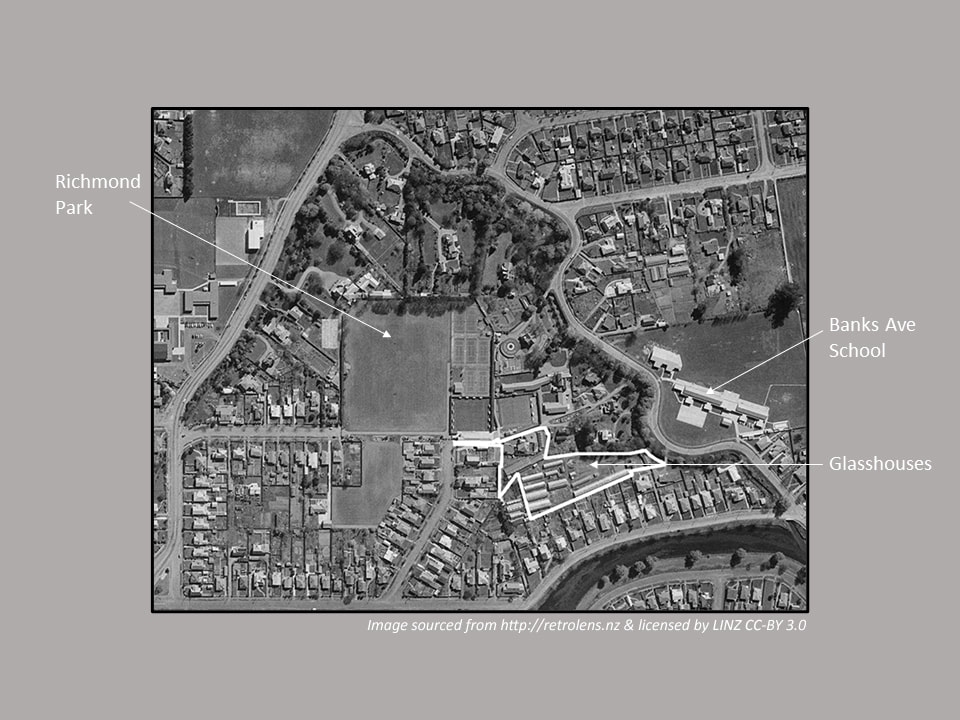
The aerial photo, above, taken in 1961, shows the Hickling property outlined in white, and how it fitted into the surrounding neighbourhood between Dudley Creek and the Avon River.
​William Hickling and his wife Agnes were married in Birmingham, England in March, 1909. They must have emigrated to New Zealand soon after, as their first child, Ivy Lillian, was born in New Zealand in 1910. The couple would have two more children: Elsie, b 1913 and Arthur, b 1920. From 1925, the family lived at 389 River Road. William established the property, building glasshouses for growing tomatoes. 
Picture
Something of a family portrait. William Hickling and his wife, Agnes, centre. On the left is their younger daughter, Elsie, and at right, her sister Lillian. The photo was probably taken by Arthur.
Picture
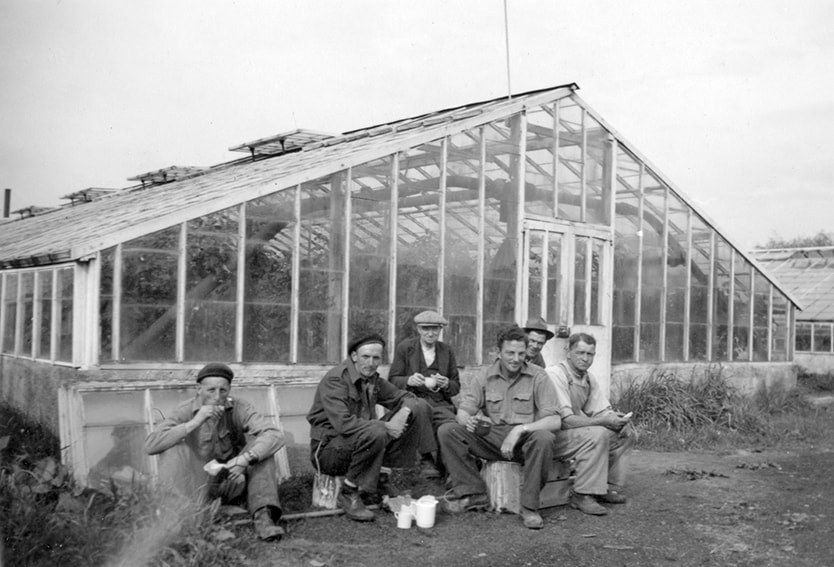
Smoko: William, 3rd from left, and Arthur 4th from left.
Picture
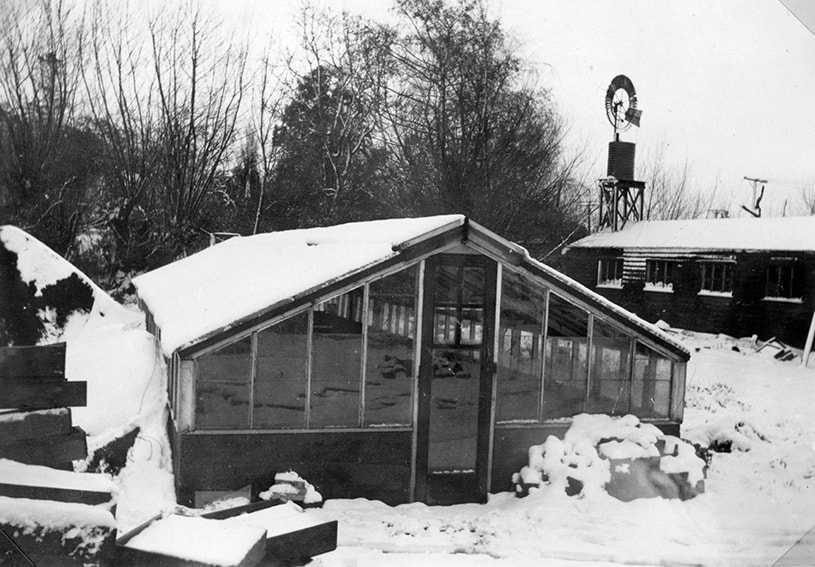
This picture was probably taken after the big snow, August 1945.
Picture
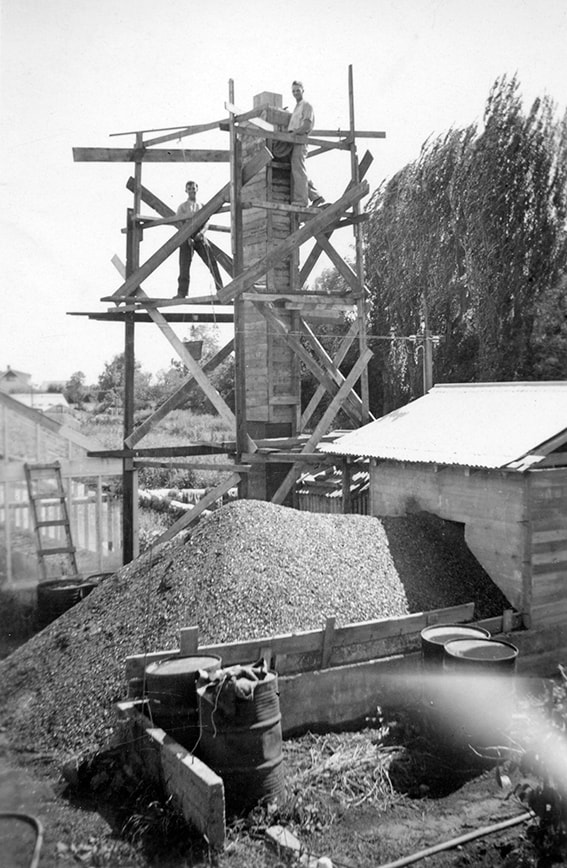
Building the chimney stack for the No.1 boiler. The boiler burned coal or slack (fine coal).
Picture
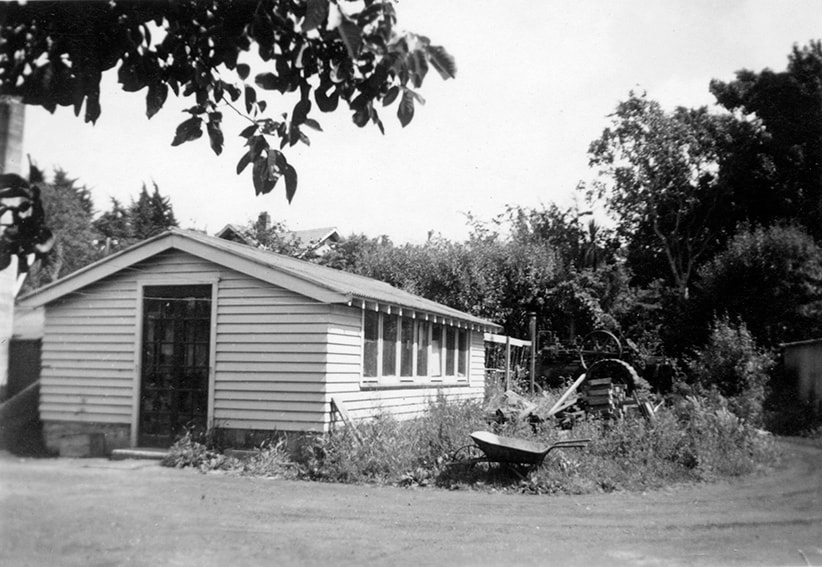
The packing shed, where tomatoes were sorted and packed for shipping all over the South Island.
Picture
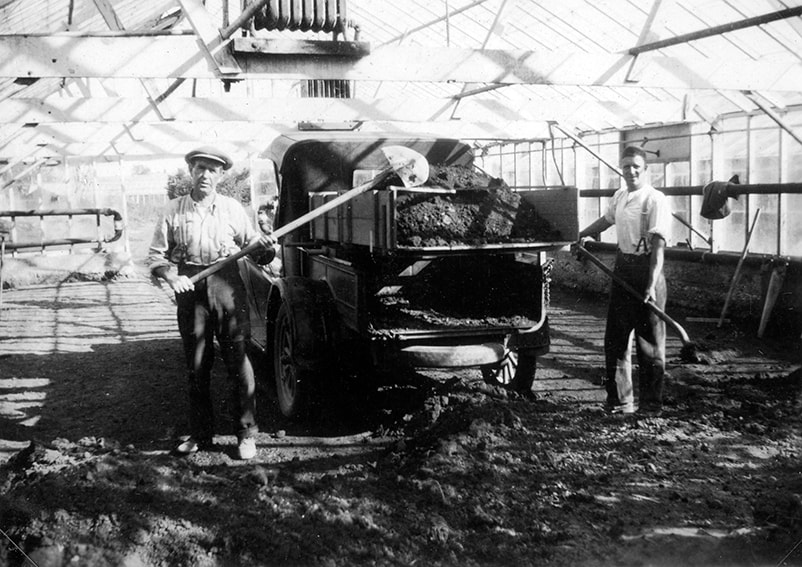
Always something to do…William, left, and Arthur. The vehicle is a Hudson Terraplane car, highly modified for use as a tip truck!?
Picture
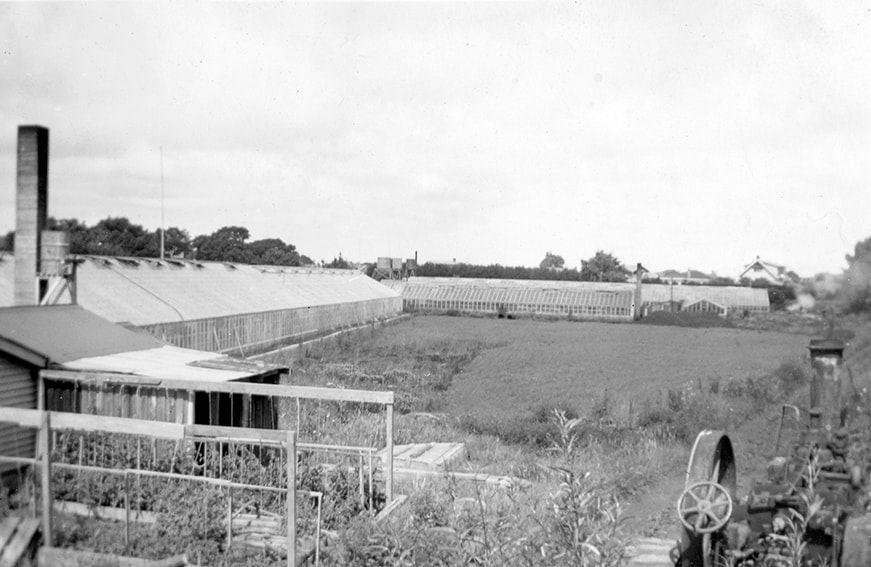
The main paddock, north of the main glasshouse. Here the family grew a range of produce: lilies, vegetables, berries and blackcurrants.

Picture
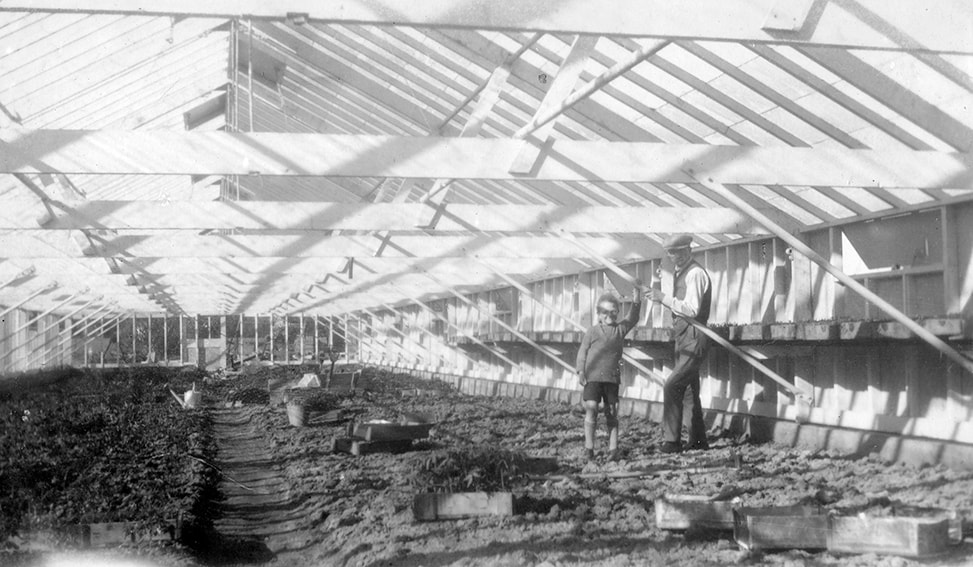
The main glasshouse (No 1 & 2), ready for planting out. Taken in the days before the family installed raised beds, which made this work much easier on the back!?
Picture
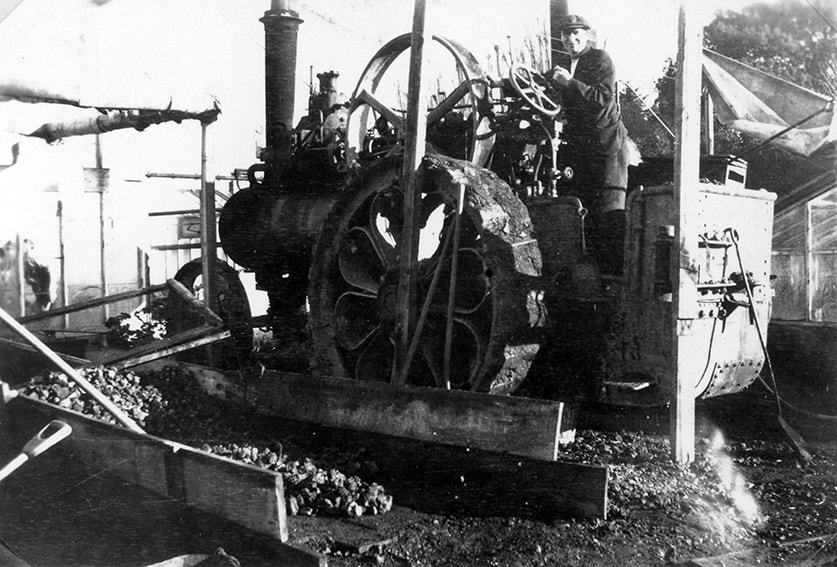
A Burrel traction engine served as a boiler to sterilise the soil in the glasshouses. On occasion, the engine served to pull vehicles out of Dudley Creek.
Picture
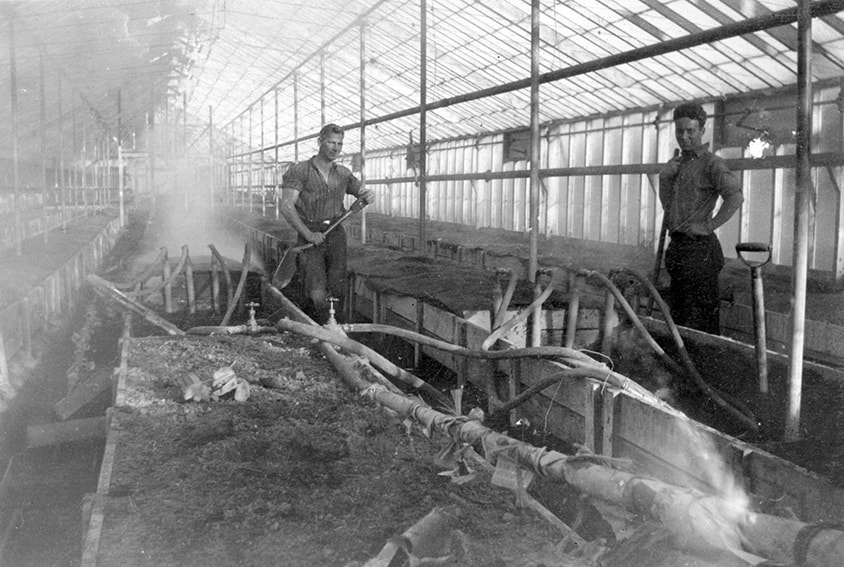
Sterilising the soils, No. 1 glasshouse. The pipes were pushed into the beds (raised by this time!) and steam was pumped through the soil.
Picture
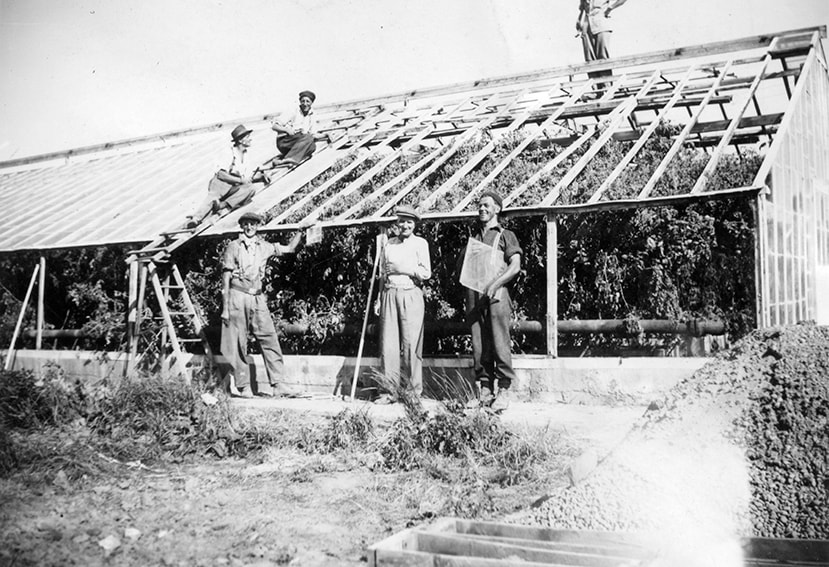
Repairs after a hail storm. Handwritten caption on reverse reads: “In front: C. McLean, W. Hickling, C. Carson. Up ladder, Gef [sic]. Arthur on top, head cut off. “
Picture
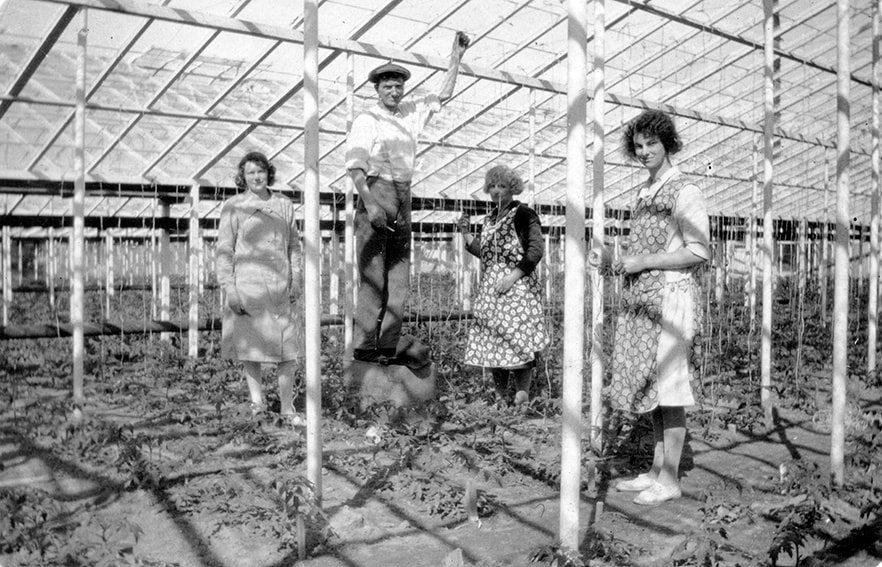
Another large tomato crop underway.
0 Comments

Mrs Murphy and the Reminiscence Man

28/7/2023

0 Comments

 
Who was the Reminiscence Man? In the 1920s, over 50 articles appeared in The Star newspaper under the byline, The Reminiscence Man. The items were all interviews with old residents who talked about their memories of life in Christchurch in the early days of European settlement. One of these pieces was an interview with Mrs Ellen Murphy, who had been one of the early residents of Richmond — before it was called Richmond!? The article was included in the 5 November, 1927 issue of The Star.
​
In the document below I have included a transcript of the Star article, with some notes and maps to expand on some points and illustrate others. And I have included information about The Reminiscence Man.

David Hollander
Richmond History Group
mrs_murphy___the_reminiscence_man_.pdf
File Size: 1772 kb
File Type: pdf
Download File

0 Comments

Shirley School Golden Jubilee Booklet, 1966

24/7/2023

0 Comments

 
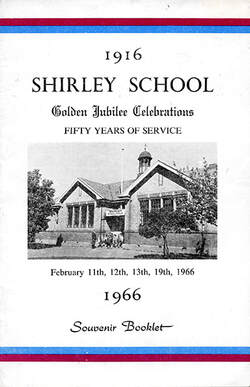
Picture
I have been on the lookout for a copy of the Shirley School 50th Jubilee Booklet for some time, but they are hard to come by. Thanks are due to John Hickling, who has loaned us his copy of the booklet for scanning and adding to our website — a PDF version is available for reading/downloading below.
​
The booklet was published to accompany the school’s jubilee celebrations held in early 1966, and includes a brief account of the school’s history since opening in 1916, on its site on the south side of Shirley Road, between Chancellor and Slater streets — opposite the site of today’s Shirley Primary School.

The opening of a new school on this site in 1916 is evidence of a growing population in north Richmond and surrounding areas; in that first year the school roll was over 700!? The school moved from the old site to a larger space on the north side of Shirley Road, probably in the 1970s — does anyone know the exact year? The old brick school building became a community centre and the grounds a local park, until the Canterbury earthquakes, which destroyed the old building. The park is still a local gem and includes several fine mature trees. The CCC has plans to build a new community centre on the site in the future.

It’s good to be able to make this publication readily available. If anyone has photos or other information about the old Shirley School, we would love to hear from you — please contact Avebury House.

David Hollander
July 2023


shirley_school-50th_jubilee-1966.pdf
File Size: 20190 kb
File Type: pdf
Download File

0 Comments

A House with a Story — Avebury House, by Jan Moody (2003)

21/4/2023

1 Comment

 
Picture
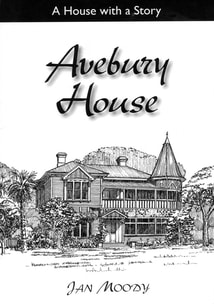
Our thanks go out to Jan Moody, who has given us permission to include her book about Avebury House on our website. A link to a PDF version of the book is available below.

Jan was involved with Avebury House in the early days,from 2002, when the CCC converted the house to a community centre, to be managed by the Avebury House Community Trust.

Jan was also studying history at UC at the time, so it was not surprising that she researched the history of the house, along with the Flesher family and their years living at Avebury. She collated  the results of her research into a 14-page booklet which was published by the AHCT in 2003. Unfortunately, only a small print run was produced and today copies are hard to come by.

So it is great that after 20 years that we can make this definitive history of Avebury House more widely available...enjoy.

avebury_house_booklet-jan_moody.pdf
File Size: 6823 kb
File Type: pdf
Download File

1 Comment

Richmond School Honours Board

12/10/2022

0 Comments

 
Picture
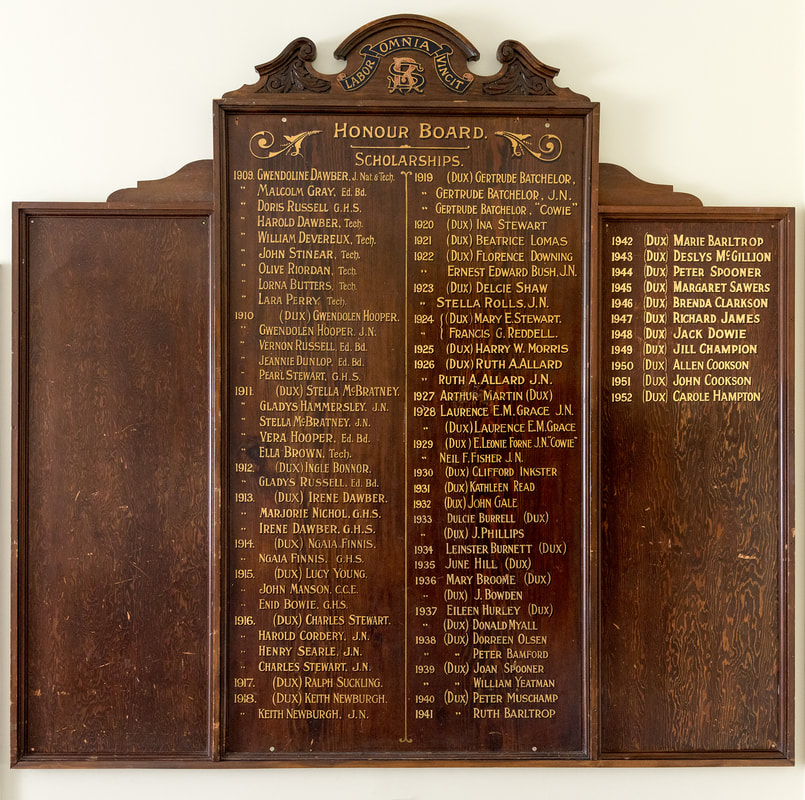
When Richmond School closed at the end of 2013, several of the school’s taonga were moved to Avebury House for safe-keeping. These items included the school’s honour board, along with the WW1 Roll of Honour and WW2 memorial plaque.

The document below tells the story of the Richmond School honour board and records the names of more than 100 of the school’s pupils who won scholarships or achieved other academic distinction at the school. My original idea was to include biographical information about these people, but this has turned out to be a longer-term project, so I have decided to post this document as a first step in telling the honour board’s story.
​
David Hollander
Richmond History Group
October 2022


richmond_school_honours_board.pdf
File Size: 4443 kb
File Type: pdf
Download File

0 Comments
<<Previous

    About

    The Richmond History Group is based at Avebury House.

    Archives

    October 2025
    August 2025
    February 2024
    October 2023
    August 2023
    July 2023
    April 2023
    October 2022
    November 2021
    October 2021
    June 2021
    January 2021
    March 2020
    February 2020
    January 2020
    October 2019
    September 2019
    August 2019
    April 2019
    November 2018
    October 2018
    August 2018
    July 2018
    June 2018
    May 2018
    April 2018
    March 2018
    February 2018
    January 2018
    December 2017

    Categories

    All
    Avebury House
    Business/Commerce
    Institutions
    Local Families
    Richmond
    Streets
    WW1

    RSS Feed

Proudly powered by Weebly
  • Home
  • About
    • Board of Trustees
    • Vision and Mission
  • History
    • Avebury House History
    • Richmond History Group
  • Room Hire
    • Rooms
    • Rates
    • Booking
  • What's On
    • Classes and Groups
    • Past Avebury Events >
      • Richmond Gala >
        • Richmond Gala 2024
        • Richmond Gala 2023
        • Richmond Gala 2021
        • Richmond Gala 2019
        • Richmond Gala 2017
      • Matariki in the Zone >
        • Matariki in the Zone 2025
        • Matariki in the Zone 2023
        • Matariki in the Zone 2022
        • Matariki in the Zone 2021
        • Matariki in the Zone 2020
        • Matariki 2019
        • Matariki in the Zone 2018
      • Spring Fair >
        • Spring Fair 2022
        • Spring Fair 2020
      • Avebury Xmas Market >
        • Avebury Night Market 2019
        • Avebury Night Market 2018
      • Teddy Bears Picnic >
        • Teddy Bears Picnic 2019
        • Teddy Bears Picnic 2017
      • Wedding Open Day 2018
      • Dementia Walk 2018
  • Newsletter
  • Contact